Software for GDPR Compliance: A Practical SMB Guide

What is GDPR compliance software, and why do SMBs need it?
GDPR compliance software is a centralized platform that automates the core privacy obligations businesses face under the General Data Protection Regulation and related laws. For small and medium businesses, the practical need is straightforward: manual processes built on spreadsheets and shared documents cannot reliably satisfy Article 30 RoPA requirements, Article 35 DPIA obligations, or the one-month response window for data subject requests under GDPR Chapter III.
These platforms replace fragmented documentation with structured, audit-ready workflows covering Records of Processing Activities, Data Protection Impact Assessments, Data Subject Access Requests, and cookie consent management. Supervisory authorities increasingly focus on process transparency during inspections, which means a business that cannot produce a complete change log or consent record on demand faces real regulatory exposure. Software addresses that gap directly.

US-based SMBs operating websites that collect data from EU or UK residents are subject to GDPR regardless of where the company is incorporated. Many of those same businesses also face CCPA/CPRA obligations for California residents and, if they serve Brazilian users, LGPD requirements. Platforms that support multi-jurisdictional privacy laws within a single system reduce the overhead of managing separate compliance programs for each regulation.
Table of Contents
- Core features to look for in GDPR compliance software
- How to choose GDPR compliance software for your SMB
- How Passiro approaches cookie consent for SMBs
- Common challenges when adopting GDPR compliance tools
- Key Takeaways
- Passiro offers free, technically sound cookie consent for SMBs
Core features to look for in GDPR compliance software
Effective data protection software shares a common functional baseline, though the depth of automation varies considerably across platforms.
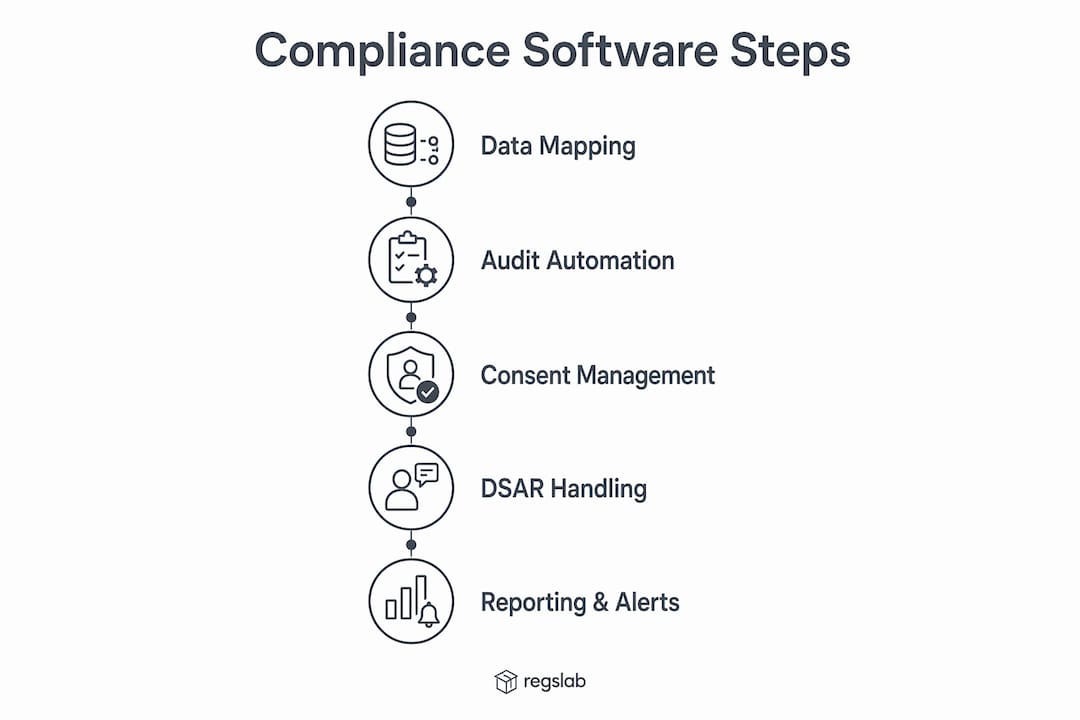
- RoPA management: Centralized records of processing activities must be dynamic, not static. Living RoPA documentation linked to actual processing activities and updated continuously is what regulators expect under Article 30.
- DPIA workflows: Guided assessments with risk scoring, version control, and collaborative review steps connect directly to the underlying processing activity, supporting Privacy by Design requirements.
- DSAR lifecycle management: Intake, identity verification, task routing, deadline tracking, and audit logging within the 30-day legal window. Platforms that automate this process reduce the risk of a missed deadline.
- Cookie consent management: Support for IAB TCF v2.3 and Google Consent Mode v2 is the technical standard for cookie consent on ad-supported or analytics-driven websites.
- Audit readiness: Complete audit trails, change logs, and version histories capture every action taken. Continuous audit readiness through automated evidence capture is what separates purpose-built compliance software from document repositories.
- Integrations: Connection to existing business systems via pre-built integrations or APIs keeps compliance data current without manual re-entry.
- Security: Access controls, data encryption, and GDPR-compliant hosting are baseline requirements, not optional features.
Pro Tip: Prioritize platforms that automate audit trails from day one. Reconstructing a compliance history after a regulatory inquiry is far more costly than maintaining one continuously.
How to choose GDPR compliance software for your SMB
Selection criteria differ depending on whether a business needs full-spectrum GDPR program management, cookie consent management, or both. Most SMBs need at least the latter, and many need both.
- Multi-law support: Verify that the platform covers the specific regulations relevant to your audience, including GDPR, CCPA/CPRA, and LGPD. Generic “privacy compliance” claims without named law support are insufficient.
- Pricing transparency: Free tiers with genuine functionality exist in this market. Platforms that obscure pricing or require a sales call before disclosing costs create unnecessary friction for SMB buyers.
- Consent framework integration: IAB TCF v2.3 and Google Consent Mode v2 integration is not optional for websites running Google Ads or Analytics. Confirm that the platform holds a registered CMP ID, not merely a banner that stores a preference locally.
- Ease of onboarding: SMBs rarely have dedicated privacy teams. Platforms with guided setup, pre-configured templates, and clear documentation reduce time to deployment.
- Scalability: A business managing one website today may manage dozens across multiple markets within two years. Platforms with no domain limits or traffic caps on their free tier avoid forcing a pricing conversation at an inconvenient moment.
- Automation depth: Evaluate how much of the RoPA, DPIA, and cookie scanning workflow is genuinely automated versus manually triggered.
- Vendor credibility: Developer expertise matters. Platforms built by practitioners who have personally navigated the compliance requirements they are solving tend to produce more reliable, real-world functionality.
For businesses managing US privacy requests alongside GDPR obligations, confirm that the platform’s workflow handles both CCPA and GDPR data subject rights within the same interface.
Pro Tip: Ask vendors for a sample audit report before committing. A platform that cannot demonstrate what it produces for a regulator is not audit-ready, regardless of its marketing claims.
How Passiro approaches cookie consent for SMBs
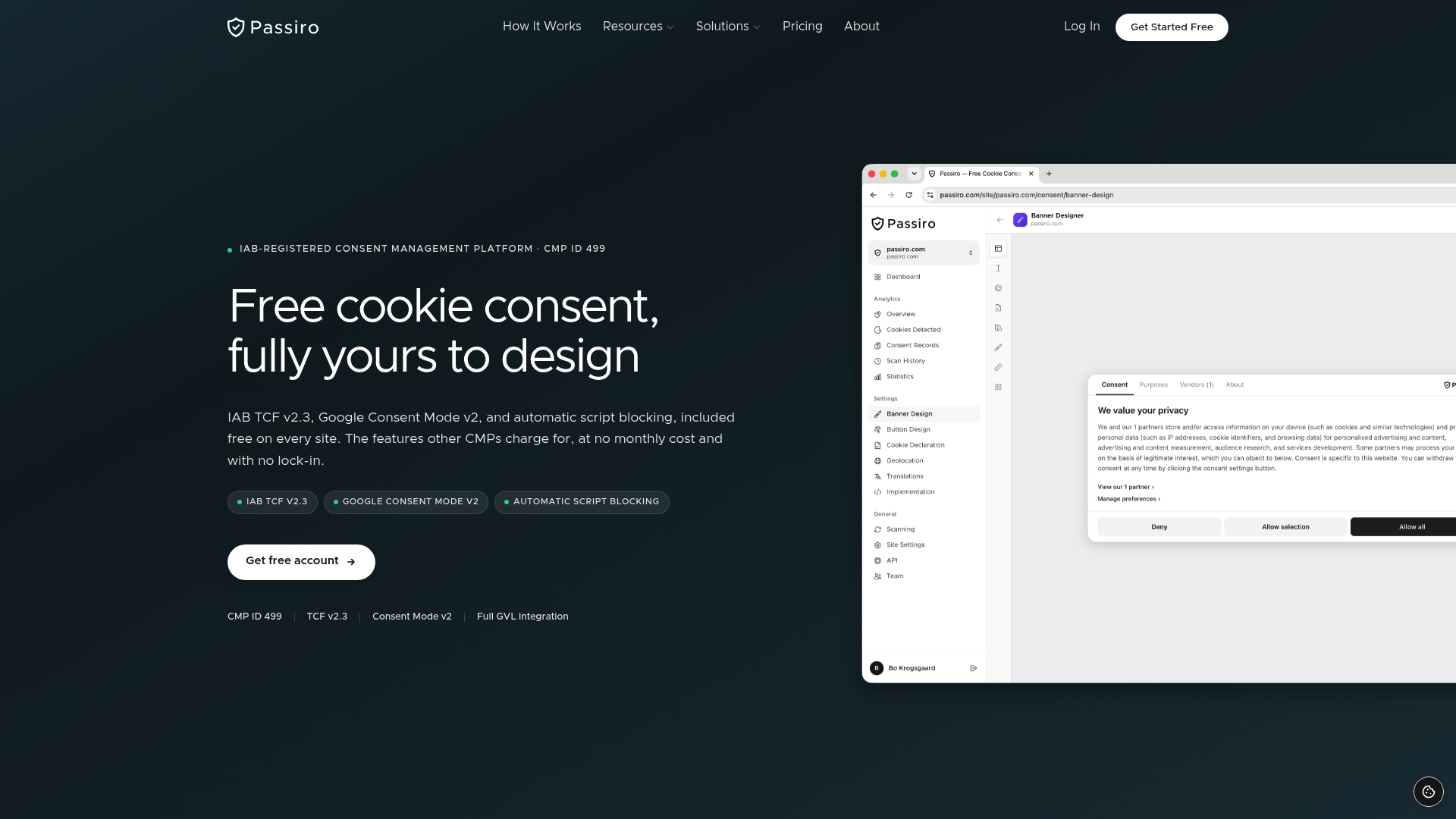
Passiro is designed to support GDPR and ePrivacy compliance for small and medium businesses, agencies, and website owners who need a technically sound consent management platform without enterprise pricing. The platform was built entirely by its founder, Bo Krogsgaard, who encountered the same problem most SMB operators face: multiple websites, multiple jurisdictions, and subscription costs that bore no relationship to the underlying technology’s actual complexity.
The result is a registered IAB CMP with ID 499, implementing IAB TCF v2.3 and Google Consent Mode v2. Automatic script blocking prevents third-party scripts from firing before consent is granted, which is the technically correct implementation of the ePrivacy Directive’s prior-consent requirement. The tracker database contains over 4,900 entries sourced from EasyPrivacy and updated daily, giving the scanner current coverage without manual maintenance.
The free tier carries no domain limits and no traffic caps, permanently. Paid plans add consent analytics, white-label branding, and API access, and that revenue funds the free tier for all users. Geo-targeted banners, a visual designer with templates, and support for 25 languages make the platform usable across markets without additional configuration services. Pricing is published in EUR.
Two genuine limitations apply. Passiro does not include DSAR automation, so businesses with significant data subject request volume will need a separate workflow for that obligation. The platform also does not offer a vendor risk management module, which means processor register management under Article 28 falls outside its scope.
Common challenges when adopting GDPR compliance tools
Even well-designed software for GDPR compliance introduces implementation challenges that SMBs should anticipate before deployment.
- Incomplete automation: No platform automates every GDPR obligation. DSAR handling and vendor risk management are frequently absent from entry-level and mid-market tools, requiring supplementary processes.
- Legacy system integration: Businesses running older CMS platforms or custom-built applications may find that pre-built integrations do not cover their stack, requiring API work or manual data entry.
- Ongoing regulatory change: Privacy law evolves. A platform that does not update its templates, framework mappings, and tracker databases regularly will fall behind the regulatory standard it was purchased to meet.
- Training gaps: Software does not replace privacy knowledge. Staff who do not understand what a DPIA is, or when one is required under Article 35, will not use the workflow correctly regardless of how well it is designed.
- Pricing escalation: Free tiers are a genuine entry point for many platforms, but features required for scaling, such as consent analytics or API access, typically sit behind paid plans. Map your feature requirements against pricing tiers before committing.
Practical mitigation approaches include phased rollouts starting with cookie consent and RoPA before adding DPIA workflows, vetting vendors on their update cadence and regulatory monitoring practices, and confirming support availability before signing up. A GDPR compliance test run against your existing website is a useful baseline before selecting any platform.
Key Takeaways
Effective GDPR compliance software replaces manual spreadsheets with automated, audit-ready workflows covering RoPA, DPIAs, DSARs, and cookie consent, and no single platform covers every obligation equally well.
| Point | Details |
|---|---|
| RoPA must be dynamic | Static spreadsheets do not satisfy Article 30; platforms must link records to live processing activities. |
| Consent framework integration matters | IAB TCF v2.3 and Google Consent Mode v2 are the technical standard for cookie consent on analytics-driven sites. |
| Multi-law support is necessary for US SMBs | GDPR, CCPA/CPRA, and LGPD obligations often apply simultaneously; verify named law coverage before selecting a platform. |
| Audit trails require automation | Continuous, automated change logs are what supervisory authorities examine during inspections. |
| Passiro covers cookie consent for SMBs | Registered IAB CMP (ID 499) with a free permanent tier, 4,900+ tracker database, and Google Consent Mode v2, without DSAR or vendor risk management. |
Passiro offers free, technically sound cookie consent for SMBs
Cookie consent is a legal requirement under the ePrivacy Directive, and the tools to implement it correctly should not cost a monthly subscription that rivals a full hosting plan. Passiro delivers a free cookie consent platform with IAB TCF v2.3 registration, Google Consent Mode v2, automatic script blocking, and geo-targeted banners across unlimited domains and traffic, permanently.
For businesses running WordPress, Passiro offers a dedicated WordPress plugin with full TCF 2.3 support at no cost. For agencies managing consent across dozens of client sites, the platform scales without per-domain fees. The free tier is the product, not a trial. Paid plans exist for businesses that need consent analytics, white-label branding, or API access, and those subscriptions fund the free tier for everyone else. Set up your first banner at passiro.com and have a compliant consent layer running today.
Recommended
Get compliant cookie consent — free
Passiro gives you a compliant cookie banner with IAB TCF v2.3 and Google Consent Mode v2, free on every site.